What Does a Panic Attack Feel Like? (And How to Tell It’s Not Just Stress)
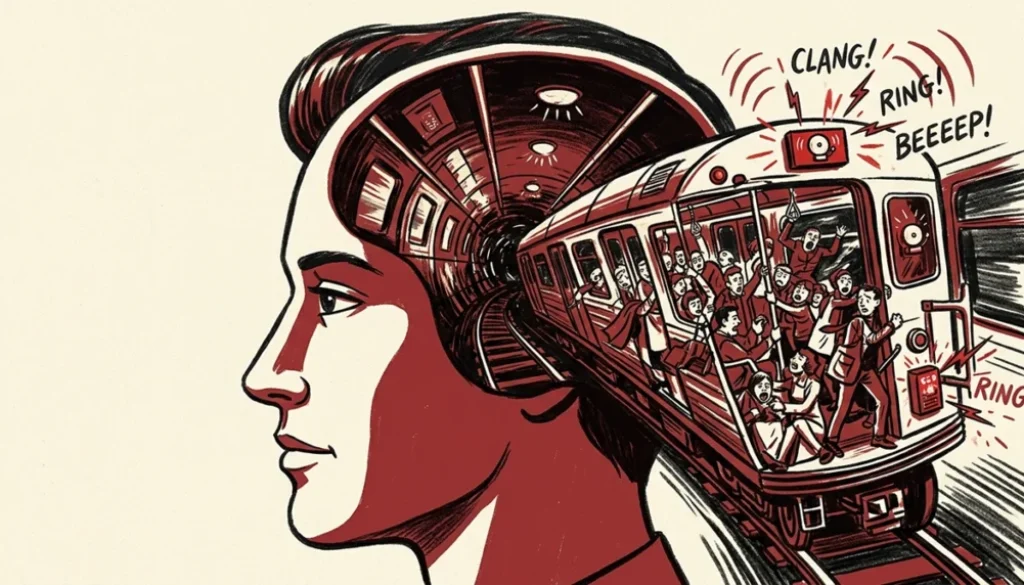
I remember my first panic attack the way people remember where they were when big things happened. Except instead of a historically significant moment, I was on a train, sandwiched between a man eating a very fragrant sandwich and a woman reading a book.
One second I was a perfectly unremarkable passenger staring out the window. The next, my heart was doing a drum solo, I couldn’t catch my breath, my hands had gone completely numb, and I was 100% certain I was dying.
On a train. With nowhere to go. Surrounded by strangers. I felt like I needed to ask someone for help.
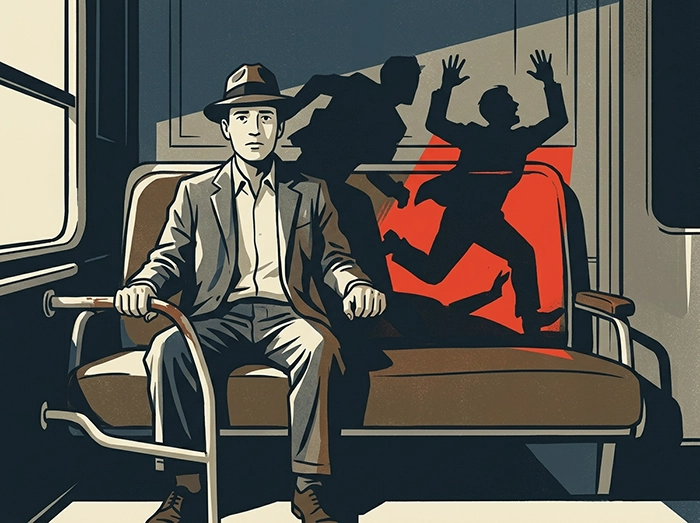
I wasn’t dying. I was having a panic attack. And if you’ve ever had one, you know that “not dying” is a technical truth your brain absolutely refuses to accept in the moment.
Nobody told me about grounding techniques back then either, because I was sitting there completely alone with my thoughts, no cell phones, no way to Google “am I dying,” no way to text anyone, just me and the hum of the rails and the absolute conviction that something had gone terribly wrong inside my chest.
Which, looking back, might have been even scarier than having a phone and being able to read WebMD. WebMD would have confirmed I was dying, so maybe ignorance was a wash.
So, What Actually Is a Panic Attack?
Here’s the frustrating, almost comedic reality: a panic attack is your body’s emergency alarm system going off when there is no emergency.
Think of it like a car alarm triggered by a squirrel jumping on the hood. Everything is functioning exactly as designed. The alarm is loud and convincing and completely, maddeningly wrong about the threat level.
Medically speaking, a panic attack is a sudden episode of intense fear that physically peaks within about 10 minutes and typically passes within 30 to 60 minutes. The kicker? It can strike even when you feel completely calm. No warning, no logical trigger, no villain to point at.
About one in three people will have at least one panic attack in their lifetime, and roughly 2.7% of U.S. adults deal with full-blown panic disorder in any given year. So if you’ve had one, you are part of an extremely large, extremely exhausted club that nobody asked to join.
What It Actually Feels Like (Because “Intense Fear” Doesn’t Quite Cover It)
The clinical symptom list reads like a medical document. Living through it reads like a horror movie.
Here’s what can happen during a panic attack:
Physical:
- Heart pounding so hard you’re convinced your chest is going to send you a bill for overtime
- Shortness of breath, like you suddenly forgot how to do the thing you’ve been doing since birth
- Chest tightness that feels exactly like a heart attack (more on this shortly)
- Numbness or tingling in your hands, feet, or face
- Dizziness, sweating, shaking, nausea, chills and hot flashes, sometimes simultaneously
Psychological:
- A wave of absolute, bone-deep terror with zero explanation
- A sense of impending doom (and not the fun kind)
- Feeling like you might “lose control” or “go crazy”
- Depersonalization, which is the surreal experience of feeling detached from your own body, like you’re watching yourself from outside
- Derealization, where the world around you feels fake or dreamlike
That last two are particularly unsettling. You’re already terrified. You don’t need reality to start glitching on top of it.
The Biology of a Body Betraying Itself
Here’s where it gets interesting, and by interesting I mean “both fascinating and deeply unfair.”
When your brain perceives danger, it fires a signal through your amygdala (the brain’s alarm system) which triggers your adrenal glands to flood your bloodstream with adrenaline and cortisol. During a panic attack, adrenaline levels can spike 2.5 times or more within seconds.
Your heart pounds to push blood to your muscles. Your breathing accelerates to take in more oxygen. Blood reroutes away from your hands and feet toward your major muscle groups, which is why your fingers go numb. Your CO2 levels shift from rapid breathing, which reduces blood flow to the brain, which causes the dizziness. Everything happening is physiologically correct.
For fighting a predator.
There is no predator. There is only you, on a train, sandwiched between a sandwich and a phone call.
The cruel twist? Your body doing the panic response so convincingly becomes its own source of fear. You feel your heart racing, you think “something must be wrong,” which makes you more afraid, which makes your heart race more. This is the panic spiral, and it is a perfectly engineered torture loop.
Panic vs. Stress: They Are Not the Same Thing
People say “I’m so stressed, I almost had a panic attack” a lot. Most of the time, that’s not quite accurate, and the distinction actually matters.
Stress builds gradually and responds to circumstances. If your boss piles on more work, stress goes up. When the deadline passes, it eases. Stress is proportional. Annoying, chronic, harmful in its own right, but proportional.
A panic attack is different in almost every measurable way:
- It arrives suddenly, peaking within minutes rather than building over hours or days
- It often has no identifiable trigger (this is maddening)
- The intensity is completely disproportionate to anything actually happening
- It comes with that specific cocktail of physical symptoms: racing heart, chest pain, numbness, derealization
- It frequently includes a genuine, overwhelming fear that you are dying
Stress does not make you feel like you’re dying. That specific experience, the sudden full-body terror with the chest pain and the tingling and the existential dread, is beyond what stress alone produces.
The Panic-or-Heart-Attack Problem
I need to address this directly because it is genuinely important.
Panic attacks and heart attacks share a troubling number of symptoms: chest pain, shortness of breath, racing heart, sweating. Even experienced clinicians need testing to tell them apart sometimes. Here are some rough guides:
Panic attack chest pain tends to stay in the chest and usually eases when your breathing calms down. Heart attack pain often spreads, to your arm, jaw, neck, shoulder, or back, and does not improve with rest or breathing techniques. Panic attacks typically pass within 30 minutes. Heart attack symptoms persist and worsen.
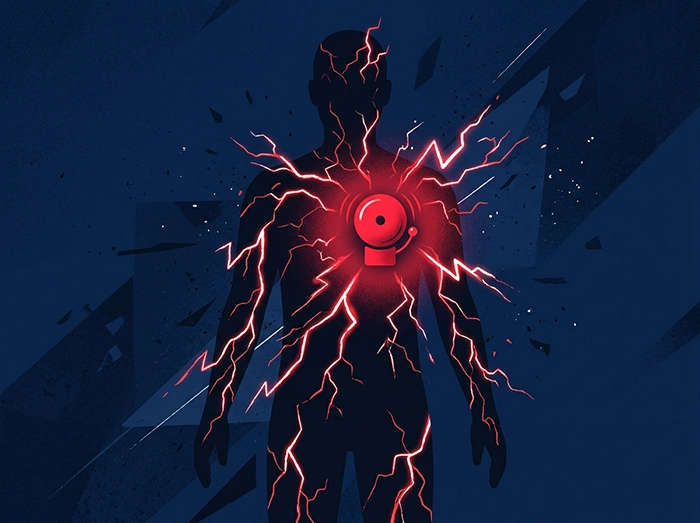
But here is the rule I live by: when in doubt, call 911. A panic attack that turns out to be a false alarm is embarrassing. A heart attack you waited out is fatal. No amount of self-diagnosis is worth that gamble.
Call if:
- Chest pain lasts more than 5 to 10 minutes
- Pain spreads to your arm, jaw, neck, or back
- You faint or nearly faint
- What you’re feeling is different from any previous panic attack you’ve had
Yes, They Can Happen While You’re Asleep
Because apparently panic attacks read the Geneva Convention and decided it was optional.
Nocturnal panic attacks jolt you awake from sleep, heart pounding, gasping, flooded with terror, with no nightmare to explain it. They carry the same symptoms as daytime attacks but hit harder because you go from unconscious to peak adrenaline response with zero transition.
People who have them often remember every detail and frequently spend the rest of the night unable to go back to sleep. Over time, this can create a genuine fear of sleeping, which is its own special misery.
They are not the same as night terrors, which involve acting out during sleep without awareness. Nocturnal panic attacks leave you wide awake, exhausted, and furious at your own nervous system.
What to Do When It’s Happening
The maddening thing about panic attacks is that fighting them tends to make them worse. Your instinct is to resist and control. The evidence-based move is mostly the opposite.
Try the 4-7-8 breathing technique. Inhale through your nose for 4 seconds, hold for 7, exhale slowly through your mouth for 8. This activates your parasympathetic nervous system, the biological “okay we’re safe now” signal, which tells your heart to slow down and your brain to stand down from the alert.
On the train, nobody told me this. I was breathing like I’d just sprinted a 5K, which was making everything significantly worse.
Try the 5-4-3-2-1 grounding method. Name 5 things you can see, 4 you can physically feel, 3 you can hear, 2 you can smell, and 1 you can taste. This pulls your attention into the present moment and interrupts the catastrophic thought spiral. On a train, this is actually not a bad exercise. There is a lot to observe. The fragrant sandwich alone could carry you through several categories.
Stop fighting it. This is the counterintuitive one. Reminding yourself, “This is a panic attack. It is deeply unpleasant but it is not dangerous. It will pass,” can actually break the fear-of-fear loop. You are not losing your mind. Your alarm system misfired. That’s it.
Cold water helps. Splashing cold water on your face or holding ice activates something called the dive reflex, which physiologically slows your heart rate. On a train with no access to cold water, this is less practical. I’m just being honest with you.
When to Actually Talk to Someone
Here’s where I want to be very clear about something: I am not a doctor, a therapist, or any kind of medical professional. I am a person who has had panic attacks in increasingly inconvenient locations and has done a lot of reading about it.
That said, please consider talking to a mental health professional if any of these apply to you:
- You’ve had more than one panic attack
- You’re starting to avoid places or situations because you’re afraid of triggering another one (this is how agoraphobia quietly develops, and it is sneaky)
- You’re losing sleep, missing work, or withdrawing from relationships because of panic
- You’re using alcohol or anything else to take the edge off
- The attacks are coming alongside depression or persistent anxiety
- You’re spending significant mental energy dreading the next one
That last one is important. The fear of the next panic attack is its own condition, and it deserves treatment too.
What Treatment Actually Looks Like
The gold standard is Cognitive Behavioral Therapy, or CBT. It works by teaching you how panic functions in your body and brain, helping you identify and challenge the catastrophic thoughts that feed the cycle, and gradually reintroducing the physical sensations you’ve come to fear in a controlled, safe setting.
That last part sounds alarming but it’s genuinely effective. The goal is to teach your nervous system that a racing heart is not a death sentence. Studies consistently show that CBT with this kind of interoceptive exposure achieves significantly higher remission rates than less structured approaches.
Medication is also an option and nothing to be ashamed of. SSRIs, SNRIs, and in some cases short-term benzodiazepines can be prescribed alongside therapy, particularly when attacks are frequent or severely disrupting your life.
Breathing retraining and relaxation techniques help too, though research suggests they work best as complements to therapy rather than standalone fixes. Think of them as the tools you use between sessions, not the whole plan.
The Part Nobody Tells You
Up to one in three people will have at least one panic attack in their lifetime. That is an enormous number of people white-knuckling it through grocery stores and commuter trains and completely ordinary Tuesday afternoons, convinced something is catastrophically wrong with them.
Nothing is catastrophically wrong with you. Your brain’s threat detection system got confused. It fired an alarm with no fire. Every sensation you felt was real, and none of it meant what your brain said it meant.
That doesn’t make it less terrifying in the moment. But it does mean it’s treatable, it’s survivable, and you are nowhere near as alone in it as it feels when you’re stuck on a train with a pounding heart and nowhere to go.
If this sounds familiar, please talk to someone. Not because you’re broken. Because you don’t have to keep white-knuckling it.
If you are in crisis or think you may have an emergency, call your doctor, go to the emergency room, or call 911 immediately. If you’re having suicidal thoughts, call 1-800-273-TALK (8255) to talk to a trained counselor.